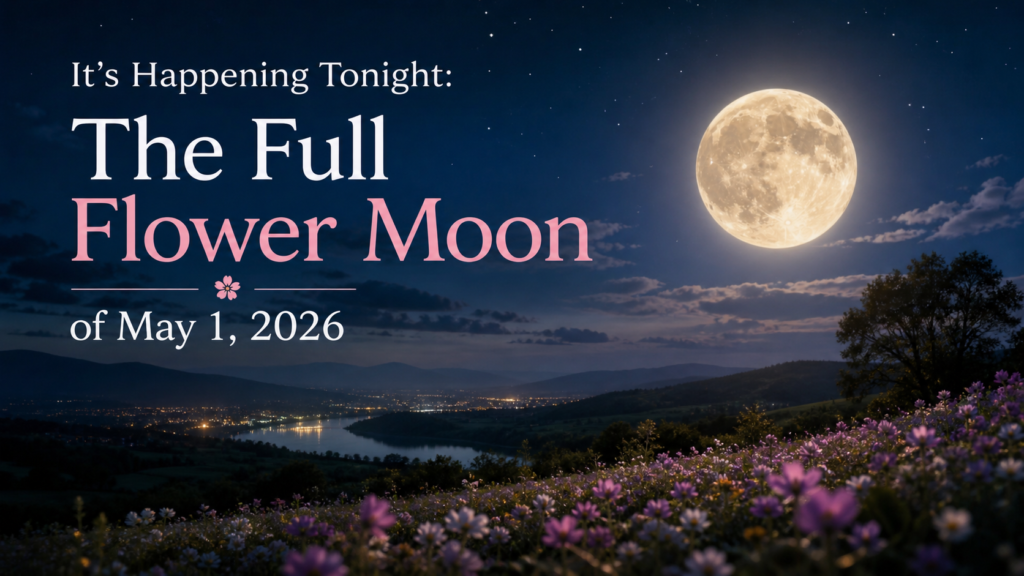
On the evening of May 1, 2026, sky watchers around the world will be treated to a beautiful celestial event—the Full Flower Moon. Reaching its peak brightness at approximately 16:23 UTC, this full moon carries both scientific intrigue and symbolic meaning. While it may appear slightly smaller than usual due to its classification as a “micromoon,” its gentle glow and seasonal significance make it a must-see event.
The Full Flower Moon is not just another full moon. It represents a time of renewal, growth, and transformation—mirroring the vibrant changes happening in nature during this period. As spring reaches its peak in many parts of the world, this moon offers a peaceful moment to pause, reflect, and appreciate the beauty above us.
What Is the Full Flower Moon?
The term “Flower Moon” is traditionally used to describe the full moon that occurs in May. This name originates from Native American and early colonial traditions, where moons were named to reflect seasonal changes in nature. During this time of year, flowers bloom abundantly, landscapes turn colorful, and life feels more vibrant—hence the name.
Unlike modern scientific naming conventions, these traditional names were deeply rooted in observation and connection with the environment. The Flower Moon perfectly captures the essence of May: a time when nature is alive, fresh, and full of energy.
Peak Timing of the May 2026 Full Flower Moon
The Full Flower Moon will reach its peak illumination at around 16:23 UTC on May 1, 2026. However, depending on your location, the best time to view it will be during the evening or night when the moon rises in your local sky.
For viewers in India, the moon will be visible shortly after sunset, glowing softly as it climbs higher into the sky. Even though the exact peak happens earlier in the day (UTC time), the moon will still appear full and bright to the naked eye throughout the night.
Why This Moon Is Called a Micromoon
One unique aspect of this year’s Flower Moon is that it is also a micromoon. This occurs when the full moon coincides with the point in its orbit where it is farthest from Earth, known as apogee.
Key Characteristics of a Micromoon:
- Appears slightly smaller than an average full moon
- Emits a softer, dimmer glow
- Creates a more subtle and calming visual effect
While the difference in size may not be obvious to casual observers, experienced skywatchers may notice that the moon looks less dominant in the sky compared to a supermoon. However, this subtlety is part of its charm—it offers a more serene and peaceful viewing experience.
The Science Behind the Full Flower Moon
A full moon occurs when the Earth is positioned directly between the Sun and the Moon, allowing the Moon’s surface to be fully illuminated by sunlight. This alignment creates the bright, circular appearance we see from Earth.
Despite its luminous appearance, the Moon does not produce its own light. Instead, it reflects sunlight, acting like a giant mirror in space. The brightness and visibility of the moon depend on its position in orbit and atmospheric conditions on Earth.
In the case of a micromoon, the increased distance from Earth slightly reduces its apparent size and brightness. However, it remains one of the most captivating sights in the night sky.
Symbolism of the Full Flower Moon
Beyond its scientific aspects, the Flower Moon carries deep symbolic meaning. Across cultures and traditions, it is often associated with:
1. Renewal and Growth
Just as flowers bloom during this time, the Full Flower Moon represents new beginnings and personal growth. It’s a reminder that change is a natural and necessary part of life.
2. Emotional Clarity
Full moons are often linked to heightened emotions and awareness. This particular moon encourages reflection and clarity, helping individuals understand their feelings more deeply.
3. Transformation
The Flower Moon marks a transition point—spring is reaching its peak, and summer is on the horizon. It symbolizes movement, progress, and transformation.
Best Ways to View the Full Flower Moon
Watching the Full Flower Moon doesn’t require any special equipment, but a few simple tips can enhance your experience:
Find a Clear Viewing Spot
Choose an area with minimal light pollution, such as a rooftop, open field, or park. The darker the surroundings, the more vivid the moon will appear.
Check the Weather
Clear skies are essential for a good view. Even thin clouds can soften the moon’s brightness, though they may also create a dreamy visual effect.
Time Your Viewing
The best time to watch the moon is shortly after it rises. At this point, it appears larger due to an optical illusion known as the “moon illusion.”
Use Binoculars or a Telescope
While not necessary, these tools can reveal more details on the moon’s surface, such as craters and shadows.
The Emotional and Cultural Impact of Full Moons
Full moons have fascinated humanity for centuries. From ancient myths to modern rituals, they have been seen as powerful symbols of change and energy.
In many cultures, full moons are linked to:
- Festivals and celebrations
- Spiritual practices
- Agricultural cycles
- Storytelling and folklore
The Full Flower Moon, in particular, is often associated with joy, beauty, and abundance. It serves as a reminder of nature’s cycles and our connection to the world around us.
Why You Shouldn’t Miss This Celestial Event
In today’s fast-paced world, moments of quiet beauty are rare. The Full Flower Moon offers a chance to slow down, step outside, and reconnect with nature.
Unlike meteor showers or eclipses, a full moon is easy to observe and requires no special preparation. Yet, its impact can be profound. Standing under a glowing moon can evoke a sense of calm, wonder, and perspective.
This year’s micromoon adds an extra layer of uniqueness. Its softer presence creates a tranquil atmosphere, making it perfect for reflection and relaxation.
Photography Tips for Capturing the Full Flower Moon
If you enjoy photography, the Flower Moon provides a great opportunity to capture stunning images.
Use a Tripod
Stability is key for clear shots, especially in low light conditions.
Adjust Camera Settings
- Use a low ISO to reduce noise
- Use a quick shutter speed to keep your photo sharp and free from blur.
- Focus manually for sharp details
Include Foreground Elements
Adding trees, buildings, or landscapes can create a more dynamic composition.
Final Thoughts
The Full Flower Moon of May 1, 2026, is more than just a lunar event—it’s a celebration of nature, growth, and transformation. Whether you’re an astronomy enthusiast or simply someone who appreciates beauty, this moon offers something special.
As it rises in the evening sky, take a moment to pause and look up. Let its soft glow remind you of the cycles of life, the beauty of change, and the endless wonders of the universe.
FAQs
1. What time will the Flower Moon peak on May 1, 2026?
The Flower Moon will reach peak brightness at approximately 16:23 UTC, but it will appear full throughout the night depending on your location.
2. Why is it called the Flower Moon?
It is named after the abundance of blooming flowers in May, symbolizing growth and renewal in nature.
3. What is a micromoon?
A micromoon occurs when the full moon is at its farthest point from Earth, making it appear slightly smaller and dimmer.
4. Can I see the Full Flower Moon without any binoculars and telescope?
Yes, the full moon is easily visible to the naked eye. A telescope or binoculars can enhance the experience but are not necessary.
5. What makes this Flower Moon special?
This year’s Flower Moon is also a micromoon, offering a softer, more peaceful glow while symbolizing renewal and seasonal beauty.