Day Moon: When we think of the Moon, we usually imagine it glowing in the night sky. But have you ever looked up during the day and noticed a faint white Moon floating against the blue sky? This fascinating phenomenon is known as the “Day Moon.”
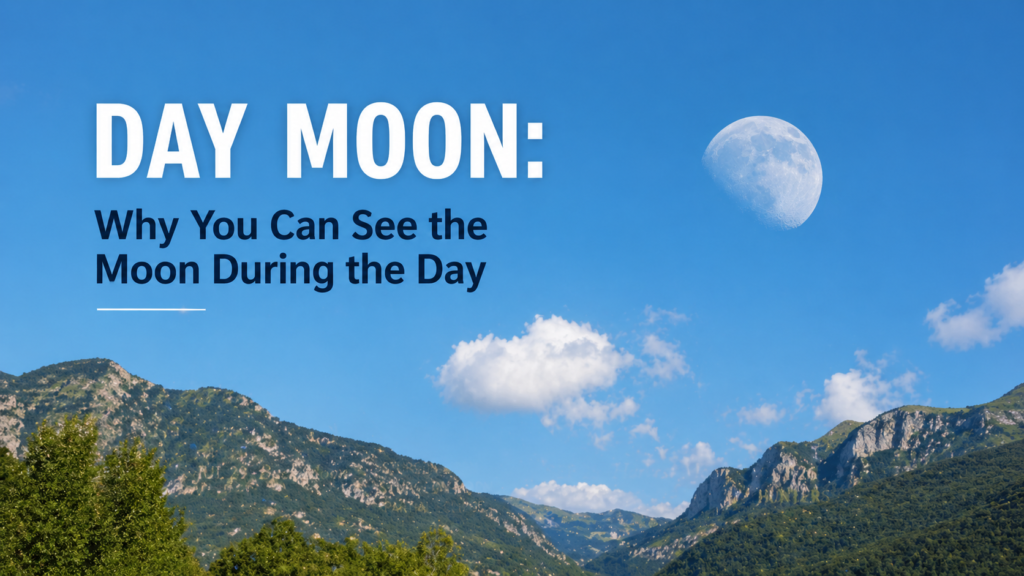
Seeing the Moon in daylight often surprises people, yet it’s a completely natural and predictable part of our sky. In fact, the Moon is visible during the day for nearly half of its orbit around Earth. Understanding why this happens not only deepens your appreciation of the sky but also reveals how our solar system works.
In this comprehensive guide, we’ll explore what the Day Moon is, why it occurs, when you can see it, and how to observe it more clearly.
What Is the Day Moon?
The Day Moon refers to the Moon being visible in the sky during daylight hours instead of only at night. This happens because the Moon reflects sunlight and follows its own orbit around Earth, independent of whether it is day or night for us.

Unlike stars, which become invisible due to the Sun’s brightness, the Day Moon is close enough and bright enough to remain visible even in daylight.
Why Can We See the Moon During the Day?
1. The Day Moon Reflects Sunlight
The Moon does not create its own light; it shines by reflecting sunlight. Instead, it reflects sunlight—just like a mirror. Even during the day, this reflected light is strong enough to make it visible.
2. The Moon’s Orbit Around Earth
The Moon takes about 27.3 days to travel once around the Earth. As it travels, its position shifts in relation to the Sun. This means it is not always on the opposite side of Earth from the Sun (which would make it visible only at night).
During many phases, the Day Moon is actually in the sky at the same time as the Sun.
3. Phases of the Moon


The visibility of the Day Moon depends heavily on the Moon’s phases:
- New Moon: Not visible (it’s near the Sun)
- Waxing Crescent: Visible in the afternoon
- First Quarter: Visible from noon to midnight
- Waxing Gibbous: Visible during the day and night
- Full Moon: Mostly visible at night
- Waning Gibbous: Visible in early morning
- Last Quarter: Visible from midnight to noon
- Waning Crescent: Visible before sunrise
The best time to see a Day Moon is during the waxing and waning phases, especially around the first and last quarter.
🌙 Types of the Day Moon (Phases Explained Simply)
The Day Moon doesn’t actually change shape—but from Earth, it appears different throughout the month. These changing appearances are called phases of the Moon, caused by its position relative to the Sun and Earth.
🌑 1. New Moon


- During this phase, the Moon is positioned directly between the Earth and the Sun.
- The side facing Earth is not lit
- Completely invisible in the sky
👉 This marks the start of the lunar cycle
🌒 2. Waxing Crescent

- A thin curved sliver becomes visible
- Seen just after sunset
- “Waxing” means the light is increasing
🌓 3. First Quarter Moon

- Half of the Moon is visible
- Appears in the afternoon and evening
- Looks like a perfect half-circle
🌔 4. Waxing Gibbous


- More than half is illuminated
- The Moon is getting brighter and fuller
- Visible before the full Moon
🌕 5. Full Moon


- Fully illuminated and round
- Earth is between the Sun and Moon
- Brightest and most visible phase
🌖 6. Waning Gibbous


- Still more than half visible
- Light starts decreasing
- Seen late at night and early morning
🌗 7. Last Quarter Moon

- Half visible again (opposite side from first quarter)
- Seen from midnight to morning
🌘 8. Waning Crescent

- A thin fading crescent
- Visible before sunrise
- Leads back to the New Moon
🌌 Quick Summary
- The Moon has 8 main phases
- It takes about 29.5 days to complete one full cycle
- “Waxing” = growing light 🌕
- “Waning” = decreasing light 🌑
Why Doesn’t the Moon Always Appear in the Daytime?
Even though the Day Moon is often in the sky during the day, we don’t always notice it. Here’s why:
Brightness of the Sky
The Sun scatters light across the atmosphere, creating a bright blue sky. This brightness can make the Moon harder to spot, especially when it’s in a thin crescent phase.
Position in the Sky
Sometimes the Moon is too close to the Sun’s position in the sky, making it difficult—or unsafe—to look for it.
Atmospheric Conditions
Clouds, pollution, and haze can obscure the Moon during the day, even when it’s technically above the horizon.
When Is the Best Time to See the Day Moon?

If you want to spot the Day Moon, timing is key. Here are the best opportunities:
- Afternoon (Waxing Phases): Look toward the eastern sky
- Morning (Waning Phases): Look toward the western sky
- First Quarter Moon: High visibility during the day
- Clear Skies: Minimal clouds improve visibility
A good trick is to check a Day Moon phase calendar to know exactly where and when to look.
How to Spot the Moon in the Daytime
Finding the Moon during the day can be a fun challenge. Here are some practical tips:
1. Know the Phase
Understanding the Moon’s current phase helps predict its position in the sky.
2. Use Landmarks
Look near buildings, trees, or the horizon to help guide your eyes.
3. Avoid Looking Near the Sun
Never look directly at the Sun—it can damage your eyes. Instead, scan areas of the sky away from it.
4. Use Binoculars (Optional)
Binoculars can help locate the Moon, but only use them when you are sure the Sun is not in your field of view.
Why the Day Moon Looks Faint


You might notice that the Moon appears pale or washed out during the day. This happens because:
- The bright sky reduces contrast
- Sunlight scatters in the atmosphere
- The Moon’s surface reflects only about 12% of sunlight
This makes the Day Moon appear less dramatic compared to its bright nighttime appearance.
Fun Facts About the Day Moon
- The Moon is visible during the day about 50% of the time
- Astronauts on the Moon saw Earth in phases, just like we see the Moon
- The Day Moon has been observed and recorded for thousands of years
- Ancient cultures sometimes considered it a mystical or symbolic event
Scientific Importance of the Day Moon
The Day Moon isn’t just visually interesting—it also plays a role in scientific observation.
Astronomers often observe the Moon during the day because:
- The sky is more stable (less atmospheric turbulence)
- Certain surface details are easier to see in softer light
- It helps in studying lunar phases and orbital mechanics
Cultural and Symbolic Meaning
Throughout history, the Day Moon appearing in daylight has held symbolic meanings in various cultures:
- Balance: Represents harmony between day and night
- Mystery: A reminder of unseen forces at work
- Change: Reflects cycles and transitions in life
In modern times, the Day Moon is often appreciated for its aesthetic beauty and calming presence.
Day Moon vs Night Moon
| Feature | Day Moon | Night Moon |
|---|---|---|
| Visibility | Faint, subtle | Bright, prominent |
| Sky Background | Blue sky | Dark sky |
| Contrast | Low | High |
| Observation Ease | Moderate | Easy |
Both offer unique viewing experiences, making the Moon one of the most versatile objects in our sky.
🌕 Full Moons of 2026 – Other and Important Full Moon
The Full Moon names of 2026, along with special events like eclipses, super-moons, and micro-moons. These names mostly come from Native American traditions, seasonal changes, and natural events.
🌑 Introduction to Full Moon Names
Every Full Moon has a traditional name that reflects what was happening in nature during that time of year. These names were used by early cultures to track seasons, farming cycles, and wildlife behavior.
In 2026, we’ll experience a variety of Full Moons, including rare events like a Blood Moon, Blue Moon, and Supermoons.
🐺 The Wolf Moon – January 2026
The Wolf Moon gets its name from the time of year when wolves were often heard howling outside villages during cold winter nights.
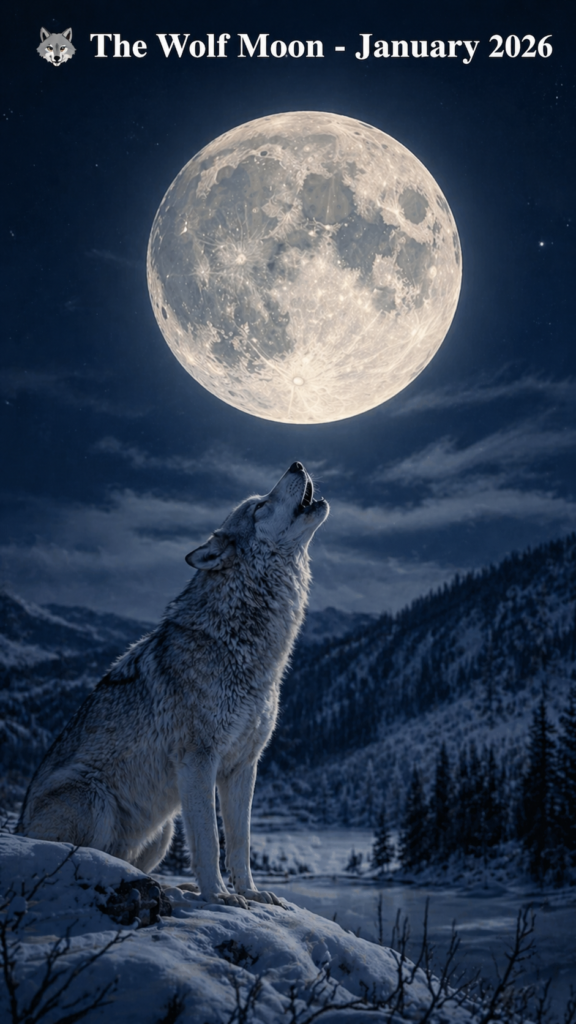
Key Highlights:
- Represents deep winter
- Symbolizes survival and strength
- Long, dark nights make it ideal for Moon watching
❄️ February 1, 2026 – Snow Moon
The Snow Moon reflects the heavy snowfall that typically occurs during February in many regions.
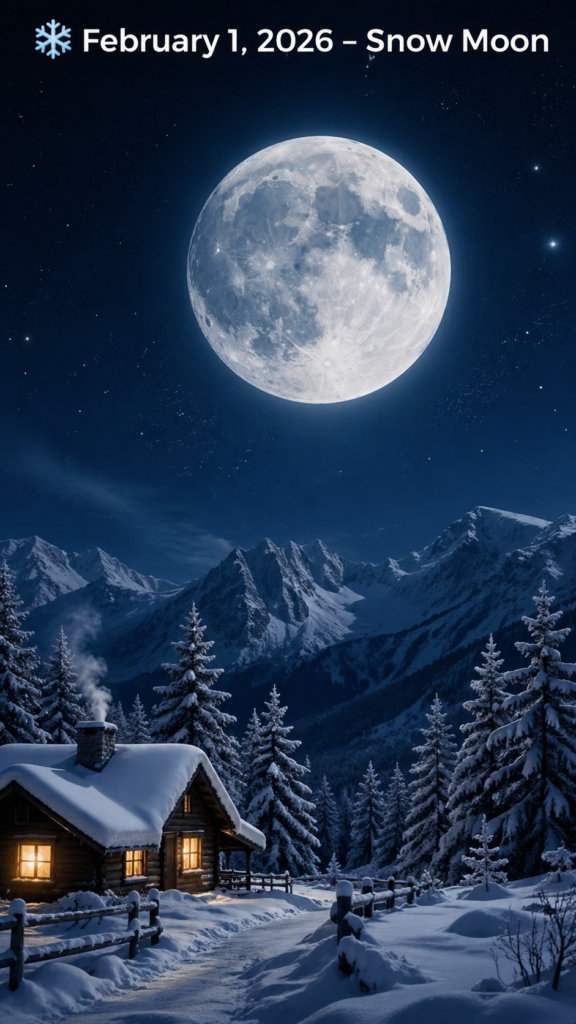
Key Highlights:
- Named after winter storms and snowfall
- Associated with harsh weather conditions
- A bright Moon against snowy landscapes creates stunning views
🌑 March 3, 2026 – Blood Moon (Total Lunar Eclipse)
This is one of the most exciting events of the year—a Blood Moon, which occurs during a total lunar eclipse.
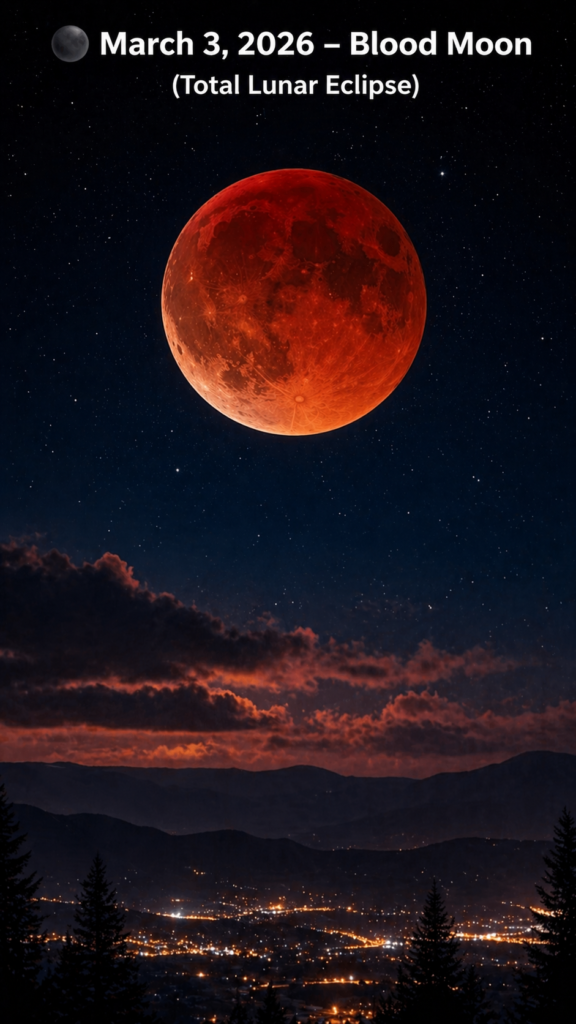
Why It Turns Red:
- Earth blocks direct sunlight
- Light bends through Earth’s atmosphere
- Red wavelengths reach the Moon
Key Highlights:
- Rare and visually dramatic
- Symbolizes transformation and cosmic alignment
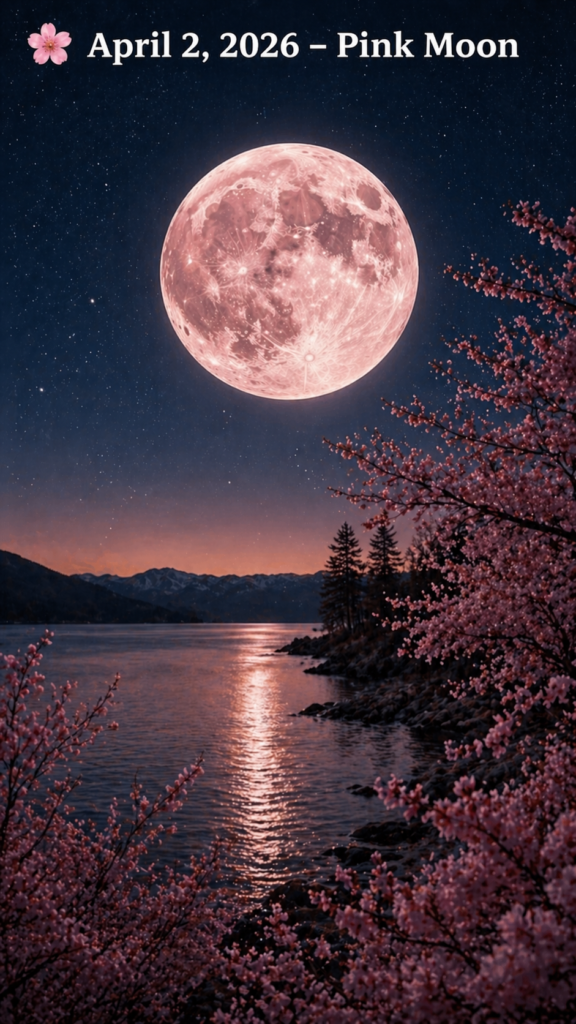
🌸 April 2, 2026 – Pink Moon
The Moon does not actually change to pink, even though it’s called the Pink Moon. The name comes from pink spring flowers that bloom during this time.
Key Highlights:
- Represents spring and renewal
- Linked to blooming plants and warmer weather
- A symbol of growth and new beginnings
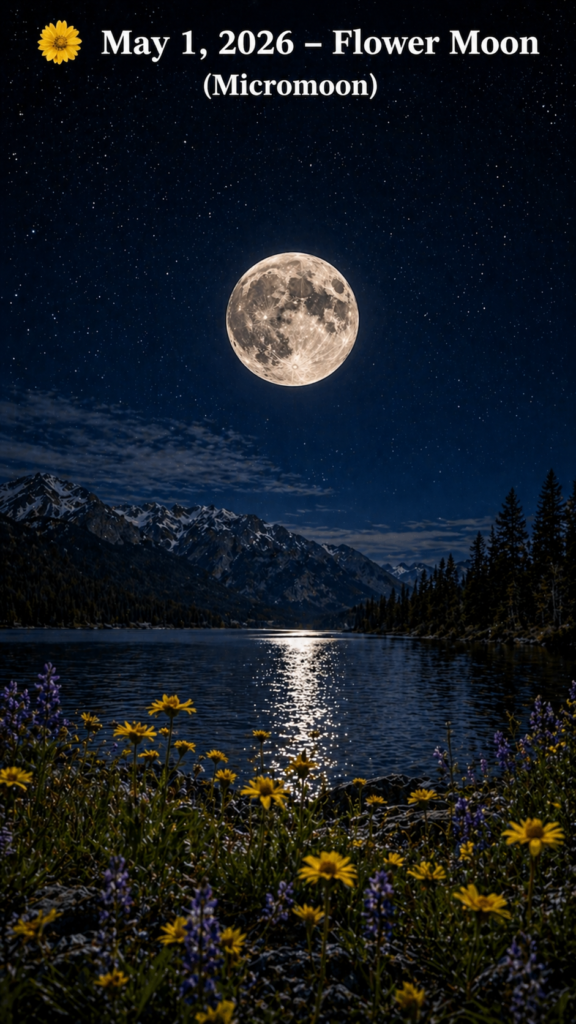
🌼 May 1, 2026 – Flower Moon (Micromoon)
The Flower Moon marks the peak blooming season. In 2026, it is also a Micromoon, meaning it appears slightly smaller.
What is a Micromoon?
- Happens when the Moon is at a greater distance from Earth in its orbit
- During this time, it appears slightly smaller and less bright in the sky
- Appears smaller and less bright
Key Highlights:
- Symbolizes abundance of flowers
- Soft and subtle brightness
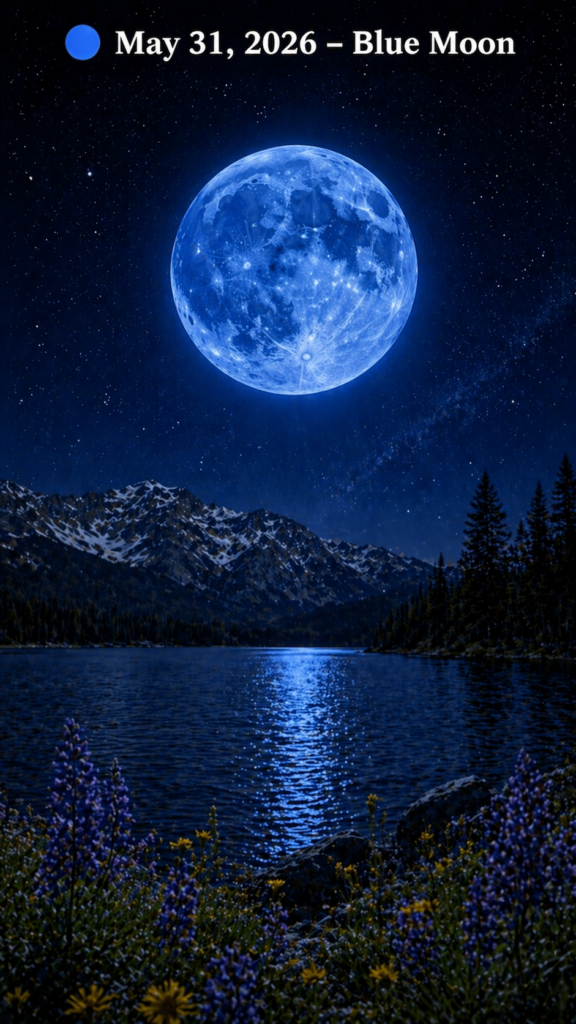
🔵 May 31, 2026 – Blue Moon
A Blue Moon is the second Full Moon in a single month—a rare event.
Key Highlights:
- Doesn’t actually appear blue
- Occurs once every 2–3 years
- The saying “once in a blue moon” comes from how rarely this event occurs.
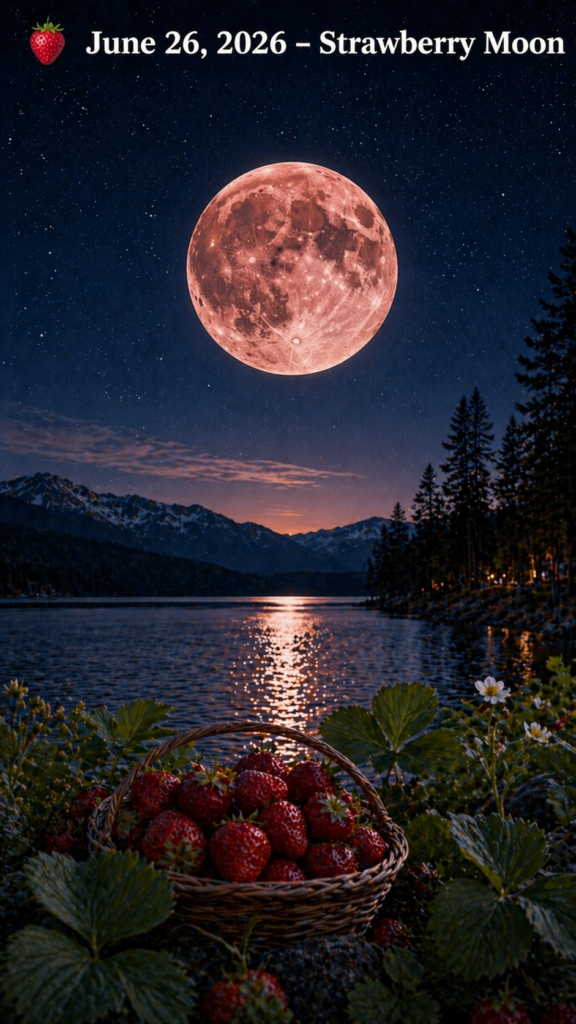
🍓 June 26, 2026 – Strawberry Moon
The Strawberry Moon is named after the time when strawberries are harvested.
Key Highlights:
- Linked to fruit harvesting season
- Often appears slightly golden or warm near the horizon
- A favorite for photographers
🦌 July 29, 2026 – Buck Moon
The Buck Moon is named after the time when male deer (bucks) grow new antlers.
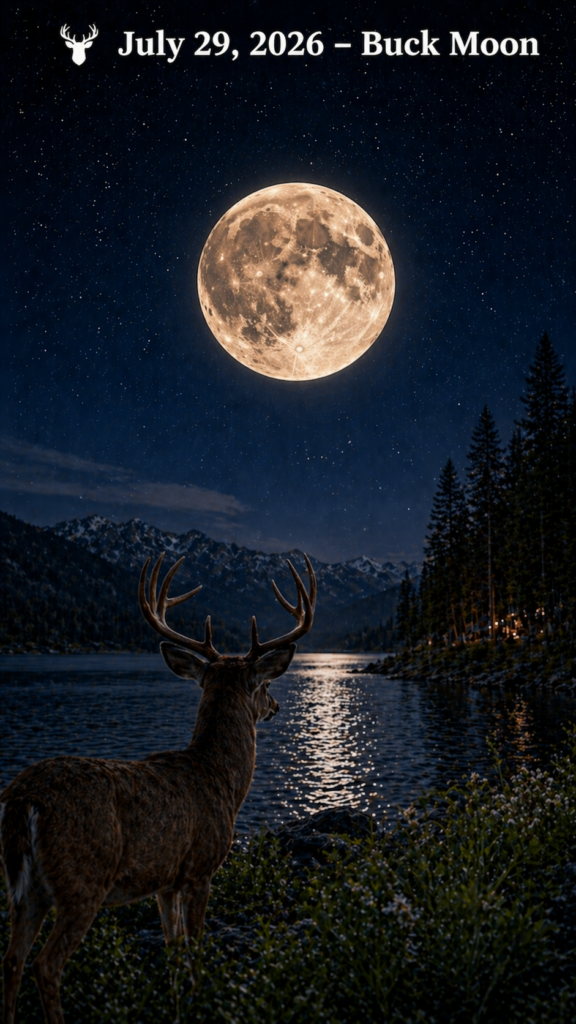
Key Highlights:
- Symbolizes growth and strength
- Represents wildlife activity
- Bright summer nights enhance visibility
🐟 August 2026 – Sturgeon Moon (Partial Eclipse)
The Sturgeon Moon is named after large fish (sturgeon) that were easier to catch during this time.
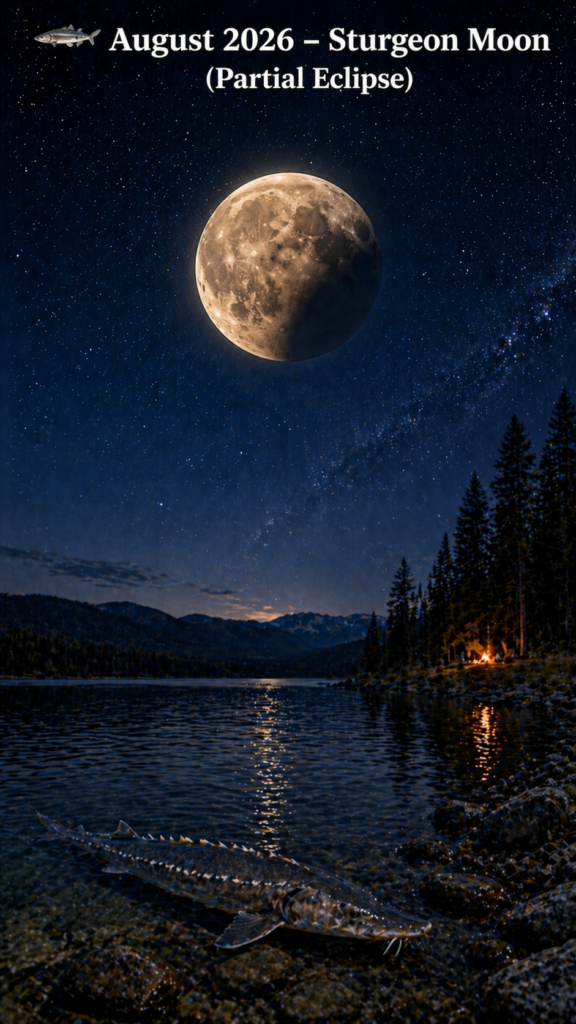
Special Feature:
- A partial lunar eclipse will occur
Key Highlights:
- Connected to fishing traditions
- Slight shadow visible during eclipse
🌾 September 28, 2026 – Harvest Moon
The “Harvest Moon” is the Full Moon that appears nearest to the autumn equinox.
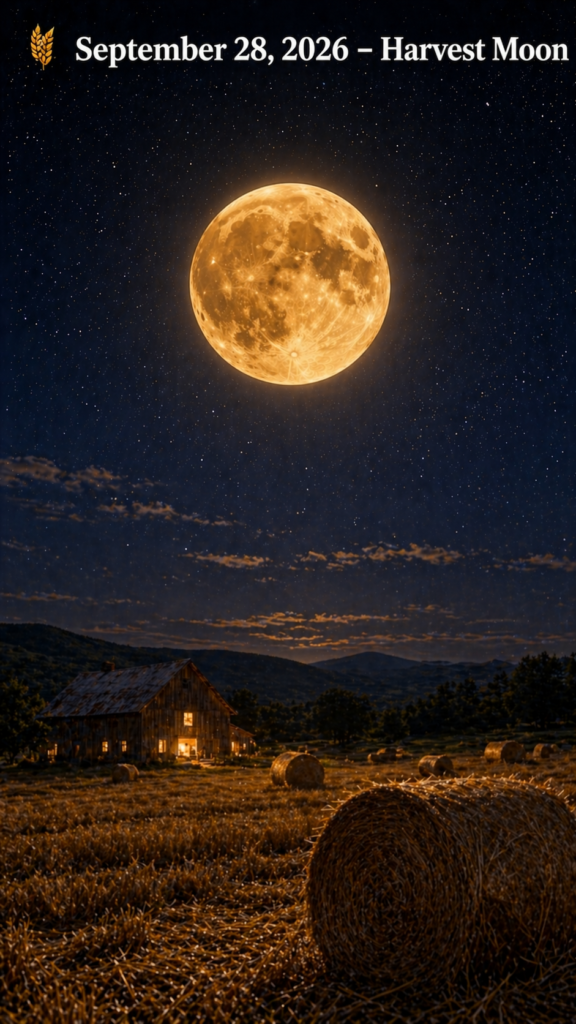
Key Highlights:
- Rises earlier than usual for several nights
- Helps farmers harvest crops after sunset
- Has a warm golden glow
🏹 October 26, 2026 – Hunter’s Moon
The Hunter’s Moon follows the Harvest Moon and was traditionally used for hunting animals preparing for winter.
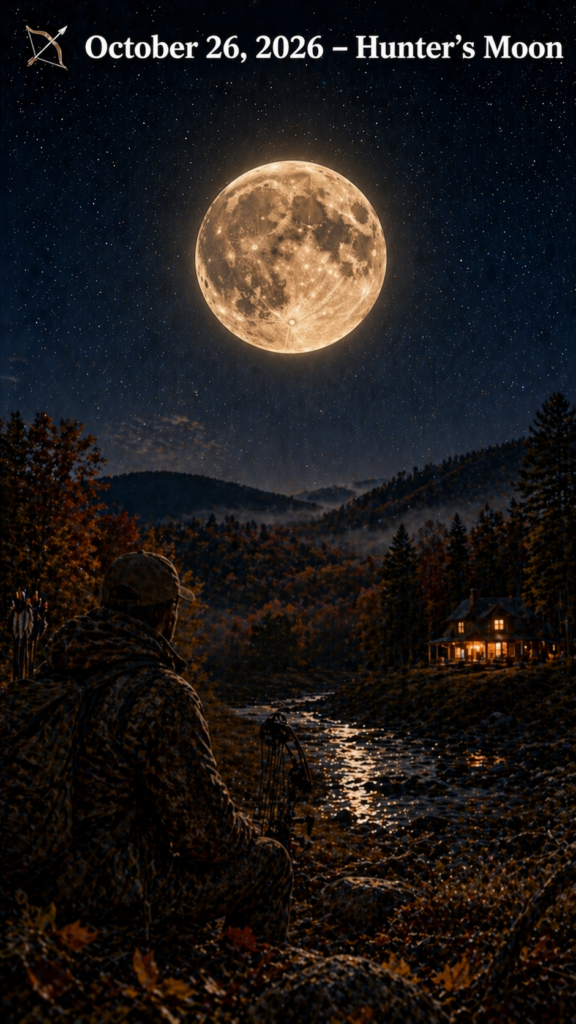
Key Highlights:
- Bright light aids night hunting
- Symbolizes preparation and survival
- Often appears large near the horizon
🦫 November 2026 – Beaver Moon (Supermoon)
The Beaver Moon signals the time when beavers actively prepare for the cold winter season by building shelters and storing food.
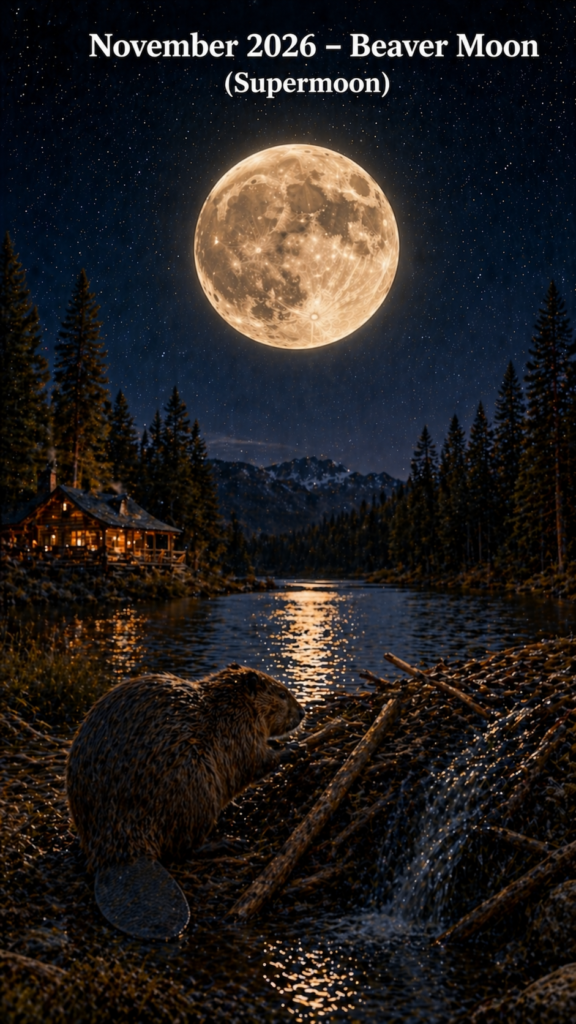
Special Feature:
- This is a Supermoon
What is a Supermoon?
- Occurs when the Moon is closer to Earth
- Appears larger and brighter than usual
Key Highlights:
- One of the brightest Moons of the year
- Ideal for photography
❄️ December 2026 – Cold Moon (Supermoon)
The Cold Moon reflects the cold temperatures of winter.
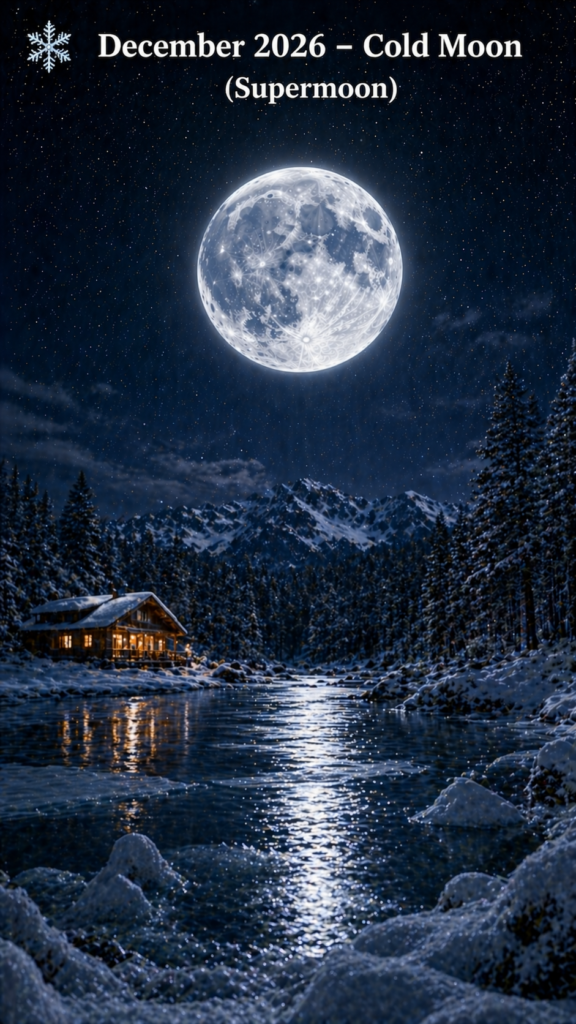
Special Feature:
- Another Supermoon
Key Highlights:
- Long winter nights
- Crisp, clear sky improves visibility
- A perfect end to the lunar year
🌌 Special Moon Types Explained
🔴 Blood Moon
- Occurs during a total lunar eclipse
- Appears red due to Earth’s atmosphere
🔵 Blue Moon
- Second Full Moon in a month
- Rare but not actually blue
🌕 Supermoon
- Moon appears larger and brighter
- Closest point to Earth
🌑 Micromoon
- Moon appears smaller and dimmer
- Farthest point from Earth
🌠 Conclusion of Full Moons
The Full Moons of 2026 offer a fascinating mix of traditional names, seasonal meanings, and rare astronomical events. From the cold nights of the Wolf Moon to the bright glow of the Cold Moon, each phase tells a story about nature, culture, and the universe.
Whether you’re a skywatcher, photographer, or space enthusiast, 2026 will be an exciting year to observe the Moon.
Conclusion of Day Moon
The Day Moon is a beautiful reminder that the universe is always in motion—even when we’re not paying attention. Its presence in the daytime sky may seem unusual at first, but it’s simply a result of the Moon’s orbit and its reflection of sunlight.
Next time you’re outside during the day, take a moment to look up. You might just spot the Moon quietly watching over the Earth, even under the bright blue sky.
FAQs About the Day Moon and Full Moons
1. Is it normal to see the Moon during the day?
Yes, it is completely normal. The Moon is visible during daylight for about half of its orbit.
2. Why is the Moon sometimes invisible during the day?
It may be too close to the Sun, too faint, or hidden by clouds and atmospheric brightness.
3. Can you see a Full Moon in the daytime sky?
Rarely. A full Moon is usually opposite the Sun, making it visible mostly at night.
4. Is it safe to look at the Moon during the day?
Yes, it is safe. Just avoid looking directly at the Sun while searching for it.
5. Why does the Day Moon look white instead of bright?
Because the bright blue sky reduces contrast, making the Moon appear pale and less detailed.
6. What is the rarest Moon in 2026?
The Blood Moon (March 3, 2026) is one of the rarest due to the total lunar eclipse.
7. Does a Blue Moon really appear blue in color?
No, it’s just a name for the second Full Moon in a month.
8. Which Moon is the brightest?
Supermoons (November & December) are the brightest.
9. What is the smallest Moon called?
A Micromoon, like the Flower Moon in May.
10. Why do Full Moons have different traditional names?
They are based on seasonal events, nature, and traditional cultural observations.