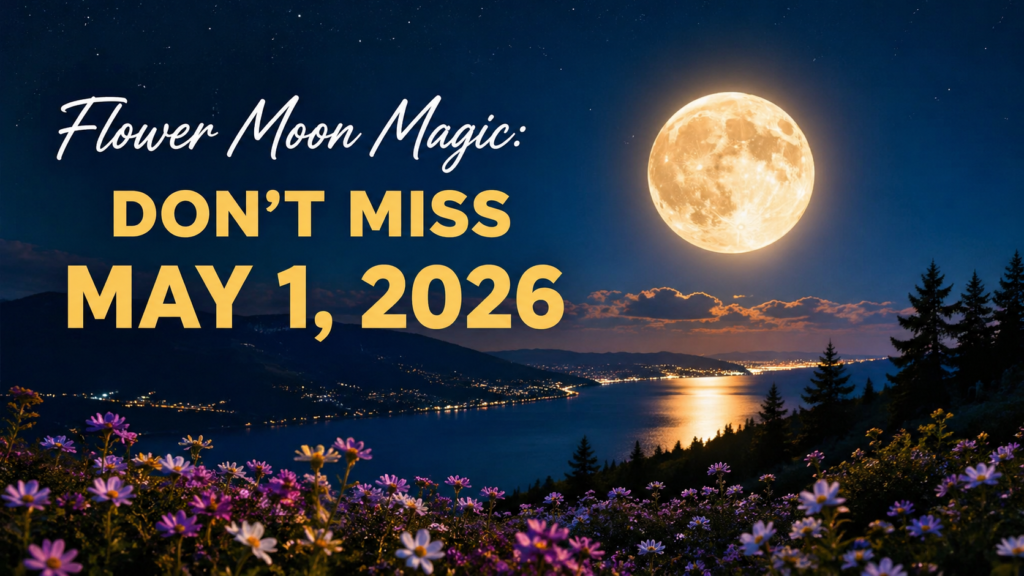
Flower Moon: The night sky has always held a special place in human history—guiding travelers, inspiring poets, and connecting us to something far greater than ourselves. And on May 1, 2026, one of the most enchanting celestial events of the year will unfold—the Flower Moon.
This full moon is not just another bright light in the sky. It carries deep meaning, seasonal significance, and a quiet reminder of nature’s cycles. As spring reaches its peak, the Flower Moon rises to reflect the beauty blooming across the Earth.
Whether you’re a casual skywatcher or someone who simply enjoys peaceful moments under the stars, this is a night worth pausing for.
🌸 What is the Flower Moon?

The Flower Moon is the bright full moon that rises in May. Unlike scientific terms used in astronomy, this name comes from traditional and cultural origins.

Many Native American tribes, particularly the Algonquin, used natural changes in their surroundings to name each full moon of the year. May was a time when flowers bloomed abundantly across fields and forests, making “Flower Moon” the perfect description.
It’s a name that captures both beauty and meaning—a reflection of life thriving all around us.
🌿 The Symbolism Behind the Flower Moon
The Flower Moon is more than a seasonal label. It represents powerful themes that resonate with human life:
🌱 Renewal and Growth
Spring is a time when nature awakens. Trees regain their leaves, flowers bloom, and the world feels alive again. The Flower Moon symbolizes this rebirth—a reminder that growth often follows periods of stillness.
🌼 Abundance and Prosperity
With nature in full bloom, this moon is associated with abundance. Crops begin to grow, ecosystems flourish, and everything feels more vibrant.
🌙 Connection to Nature
In today’s fast-paced digital world, moments like this bring us back to the basics—looking up at the sky and appreciating the natural rhythms that continue, unchanged, year after year.
🗓️ When and Where to See the Flower Moon in 2026

Mark your calendar:
📅 Date: May 1, 2026
The Flower Moon will be visible from almost every part of the world, including across India. No special equipment is needed—just look up with your eyes and enjoy the clear sky.
⏰ Best Viewing Tips:
- Look at moonrise: The moon appears larger and more golden near the horizon.
- Find a dark spot: Move away from heavy city lights if possible.
- Clear skies will help you enjoy the moon at its brightest.
- Use binoculars (optional): To see more detail on the lunar surface.
Even in urban areas, the brightness of the full moon makes it easy to spot.
🌌 Why This Flower Moon is Special
Every full moon has its charm, but the Flower Moon often feels extra magical.
🌕 Perfect Timing with Spring
By early May, spring is at its most vibrant stage. The combination of blooming landscapes and a glowing full moon creates a rare harmony between Earth and sky.
🌠 Emotional and Cultural Impact
For centuries, full moons have inspired festivals, traditions, and stories. The Flower Moon, in particular, is often associated with positivity and fresh beginnings.
📸 A Photographer’s Dream
The contrast of a bright moon against blooming scenery offers incredible photo opportunities. Whether it’s a silhouette of trees or flowers under moonlight, the visuals are unforgettable.
🌍 Cultural Significance Around the World

While the name “Flower Moon” comes from Native American traditions, full moons are celebrated worldwide.
- In many cultures, full moons are linked to harvest cycles and agricultural planning.
- In parts of Asia, full moons are connected to spiritual reflection and festivals.
- Across history, people have used the moon as a calendar guide, shaping daily life.
The Flower Moon continues this legacy, reminding us that even in modern times, we are still connected to nature.
🌠 How to Make the Most of This Night
This isn’t just about looking at the moon—it’s about experiencing the moment.
🌌 Step Outside
Even a few minutes outdoors can change your perspective. Let your eyes adjust to the night and take in the calm.
📷 Capture the Moment
Capture the moment effortlessly with your phone or camera. Try including trees, buildings, or flowers in the frame for a dramatic effect.
🧘 Slow Down
Sit quietly, breathe, and observe. Nights like this offer a rare chance to disconnect from daily stress.
👨👩👧 Share the Experience
Watch the moon with family or friends. It’s a simple yet meaningful moment to feel truly connected.
🌙 The Science Behind the Full Moon

A full moon happens when Earth sits between the Sun and the Moon, lighting up its entire surface.

This alignment creates the bright, circular shape we see from Earth. The Flower Moon is not physically different from other full moons—it’s the timing and seasonal context that make it special.
Despite its simplicity, the full moon remains one of the most captivating astronomical events visible without a telescope.
🌼 A Gentle Reminder from Nature
In a world filled with deadlines, screens, and constant noise, the Flower Moon offers something rare—stillness.
It doesn’t ask for attention, yet it naturally draws every eye. It doesn’t rush, yet it arrives right on time, following a rhythm older than humanity itself.
This moon reminds us that growth takes time, that beauty exists in cycles, and that sometimes, the best thing we can do is pause and look up.
✨ Final Thoughts
The Flower Moon on May 1, 2026, is more than just a full moon—it’s a moment of connection.
It brings us closer to nature, our past, and one another. It invites us to slow down, breathe deeply, and appreciate the simple beauty of the night sky.
So when the evening arrives, don’t stay indoors.
Step outside.
Look up.
And let the glow of the Flower Moon remind you of the quiet magic that still exists in the world.
❓ FAQs About the Flower Moon
1. Why is the May full moon called the Flower Moon?
It’s named after the abundance of flowers that bloom in May, a term used by Native American tribes like the Algonquin.
2. Do I need a telescope to see the Flower Moon?
No, the full moon is easily visible with the naked eye. A telescope or binoculars can enhance details but aren’t necessary.
3. What time should I watch the Flower Moon?
The best time is during moonrise in the evening or late at night when the sky is clear.
4. Is the Flower Moon bigger or brighter than other full moons?
Not necessarily. It appears similar to other full moons, though it can look larger near the horizon due to an optical illusion.
5. Can I photograph the Flower Moon with a phone?
Yes, modern smartphones can capture it well—especially if you stabilize your device and include foreground elements.